


Clicks are a signal. They’re not the answer.
We were in a client meeting this week when someone asked about our email click rate. Totally fair question. Click rate is sitting right there on every email dashboard, looking official and important. It feels like it should tell you something clean: your audience is engaged, or they’re not.
Lovely idea.
Unfortunately, not quite.
A click rate without context is almost useless. And the context that matters most usually isn’t technical. It’s strategic.
Before you can know whether your click rate is good, you have to know what you’re trying to do with your contact list.
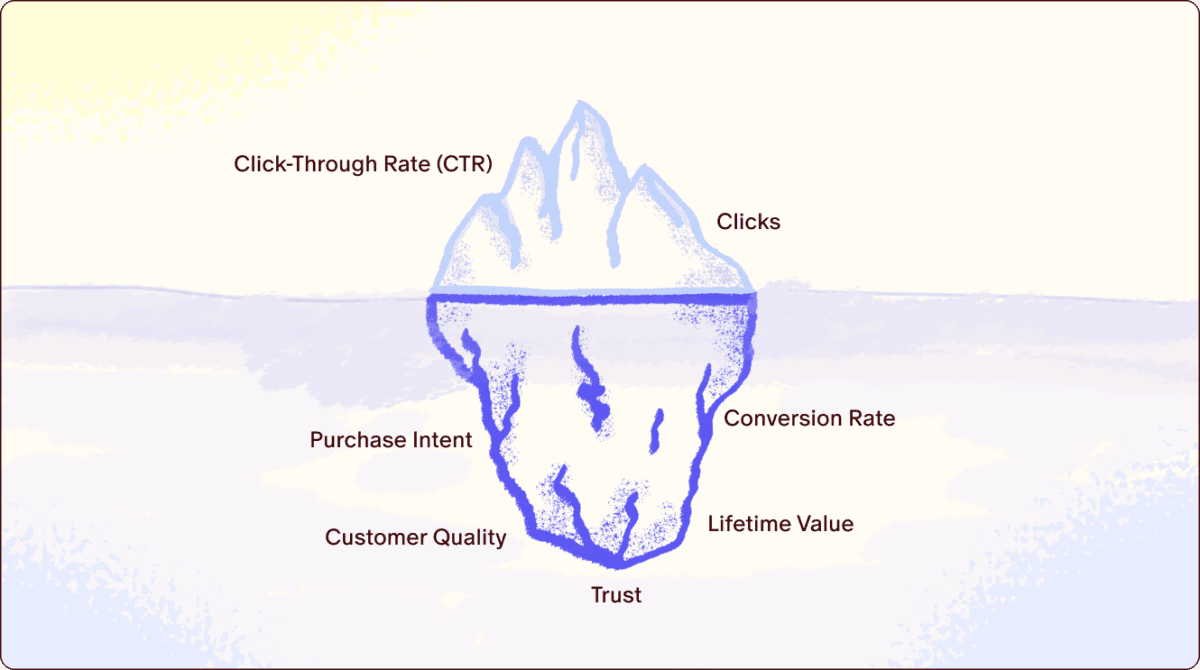
Clicks are signals. Here’s what they’re signaling.
Click data tells you what this audience is showing interest in.
What do they care about? What do they want more of? What are they willing to take a next step toward?
When a food creator’s dessert content outperforms everything else in the email welcome sequence, that confirms something we may have already suspected from social. But it does it more cleanly.
On social, the algorithm is always in the room. It decides who sees what based on its own incentives, which are not always your incentives. The data you get back is filtered through that system.
Email is different. There’s no algorithm sitting between you and your audience. Nobody is deciding that your lemon tart deserves 12% more reach today because it made people mildly angry in the comments. What you learn from click behavior is tighter.
That doesn’t mean one click tells you everything about one person.
Some of our clients talk pasta. We have a standing Wednesday meeting with a pasta-focused creator. I can’t tell you how many Wednesdays I’m deep in a conversation about pasta marketing, and then … when I’m deciding what’s for dinner that evening … I end up eating pasta.
The restaurant might think they’ve really cracked the code with me. In reality, it has almost nothing to do with them. Pasta was already in my head. They were simply nearby and competent.
On an individual level, clicks are messy.
In aggregate, across a meaningful list, they start to tell you something real.
The goal question has to come before the optimization question.
This is where most conversations about email metrics quietly drive into a ditch.
Someone looks at the click rate, decides it’s too low, and wants to fix it. But “fix the click rate” is not a goal. It’s usually a sign that the real goal hasn’t been defined yet.
Different goals point in completely different directions.
If you’re doing brand partnerships, some partners want to see 200,000 people on a list. They may not care much about click rate. They care about list size, reach, and the ability to put their brand in front of a large audience.
In that case, a high click rate on a smaller list can actually be a harder sell to certain advertisers. Not because it’s worse. Because it doesn’t match what they think they’re buying.
So if that’s the business goal, you’d manage the list one way.
If the goal is converting subscribers into a paid membership, you’d manage it very differently.
If your goal is deliverability, meaning actually landing in inboxes instead of spam folders, you’d cut the bottom 20% of cold subscribers regularly. Not because you’re cruel. Because sending to people who never open or engage drags down your sender reputation. Eventually, that means the people who do want your emails may stop getting them.
Congratulations, you protected the feelings of people ignoring you and punished the people paying attention.
Not ideal.
If your goal is conversion, whether that means paid memberships, product sales, or event tickets, you’re looking for a different signal altogether. Not “who clicked anything,” but “who clicked something that suggests they’re closer to buying?”
These goals can conflict.
A team with multiple stakeholders will often have multiple priorities pulling in different directions. The work isn’t to pick the “right” metric in isolation. The work is creating clarity on what you are actually trying to accomplish. Only then, can you decide which number points toward that outcome.
What segmentation actually does
Here’s a concrete example.
A creator is making an appearance at an event in Napa in a few weeks. That event is not for everyone on the list. It’s for a specific type of person: someone who would see a last-minute, high-end event and think, “We should go.”
There might be 500 of those people on a list of 200,000.
If you blast the whole list, most people ignore it. Deliverability takes a small hit. The newsletter experience gets a little more diluted. And the 500 people who would have actually shown up may not see the message clearly enough because it’s treated like just another broad send.
Technically, you sent the email.
Strategically, you kind of buried it.
But if you’ve been tracking what people click, the picture changes.
Events. Appearances. Lifestyle content. Recipe content. Travel. High-end experiences.
That behavior helps you find the 500 people who are most likely to care. You send to them specifically. The email lands harder, the response is stronger, and the other 199,500 people don’t have their newsletter experience interrupted by content that was never really for them.
That’s not just “better targeting,” which is one of those phrases that has been sanded smooth by too many marketing decks.
It’s basic respect for the audience.
Send people more of what they care about. Send them less of what they don’t. Radical stuff.
This is where email starts to get powerful.
Even the welcome sequence alone can get sophisticated fast. You’re tracking actions across multiple emails, tagging people based on what they click, and building segments that update as behavior changes.
It takes time to build. But the signal compounds.
The longer you run it, the more clearly you can see who’s on your list, what they care about, and what they’re likely to do next.
The metric is only useful once the question is clear.
Most teams never get there because they start with the metric instead of the goal.
The click rate becomes a number to manage rather than a question to answer. And you can spend a long time optimizing for a signal you haven’t defined, watching the fraction move up or down without ever knowing what it really means.
That’s the trap.
The dashboard looks precise. The strategy is fuzzy. So everyone stares at the number and pretends the number is the problem.
It isn’t.
The click rate only has the answers when we know what questions we’re asking.