


Most creators I talk to decide they want to launch a membership before they’ve ever mapped the relationship they already have with their audience.
They know they have something — real followers, real engagement, people who show up consistently and actually care — so they start asking the natural next question: how do I monetize this? And the answer they land on is a membership. Which isn’t wrong. But it’s early.
A membership isn’t a starting point. It’s a destination. And like any destination, you need to know where you’re standing before you can figure out how to get there.
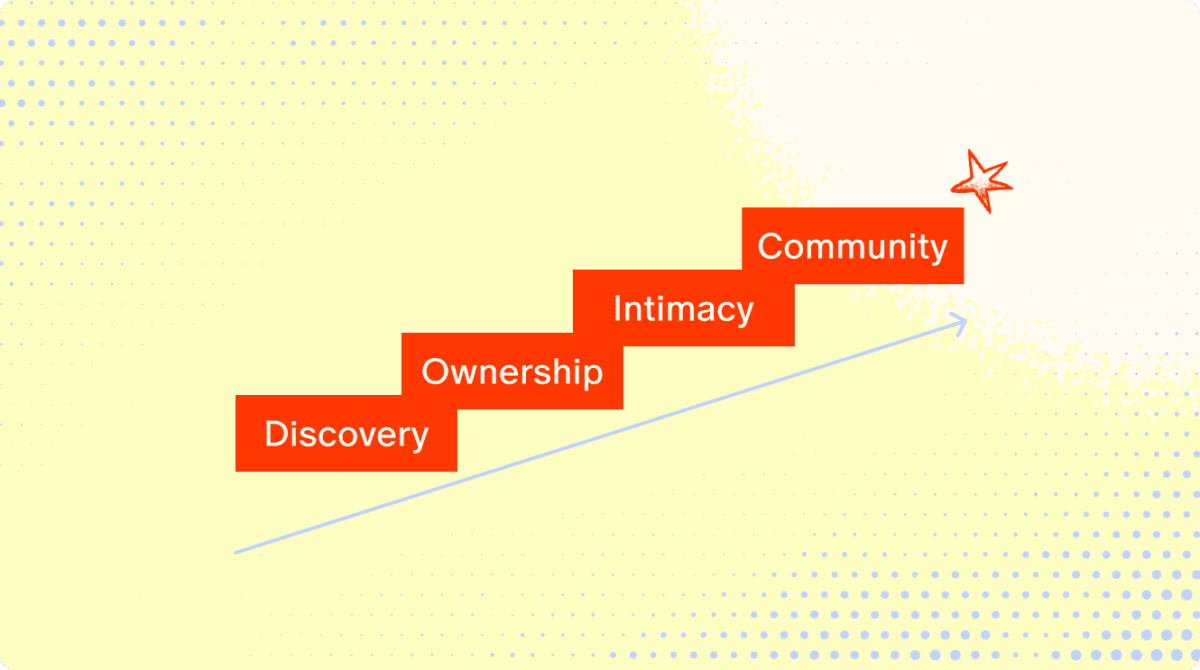
That’s where the four channels come in.
Before you build anything, before you pick a platform, before you design a benefits page, before you set a price, the most useful thing you can do is map the relationship you already have with your audience across four distinct layers: Discovery, Ownership, Intimacy, and Community. Not as a strategy exercise, but as an honest inventory.
Because here’s what I’ve seen over and over: the creators who launch memberships that actually work aren’t the ones who moved the fastest. They’re the ones who knew exactly which of these four channels was strong, which was hollow, and what needed to be built before they asked anyone to pay.
The four channels aren’t equal. They’re sequential.
I think about a creator’s entire relationship with their audience across four channels. Not four strategies, four distinct kinds of relationships, each one building on the last.
Discovery
Discovery is where someone encounters you for the first time. Social media, search, a viral moment, a friend sharing something you made. You have limited control here. The platform decides who sees what. Your job is to make something worth pausing for.
Discovery gets the most attention. It makes sense. Discovery is what got them here. You figured out how to make content that travels, how to show up in someone’s feed when they weren’t looking for you, how to make something that makes people stop scrolling. That’s genuinely hard, and it’s worth being proud of.
But discovery is borrowed momentum. The platform is carrying you. And at some point (whether it’s an algorithm shift, a format change, or just the natural ceiling of what viral content can do), that wave doesn’t carry you as far as it used to.
The creators who build something lasting aren’t the ones who figured out discovery. They’re the ones who figured out what to do after.
Ownership
Ownership is where that relationship moves to ground you actually control. Your email list, website, or newsletter. When someone gives you their email address, they’re saying something different than when they follow you. They’re saying: I want to hear from you directly. That’s consent. That’s a different level of trust, and it’s a relationship the algorithm can’t touch.
But ownership is also about something more than that. It’s about having a place that actually feels like you. A digital home that your audience walks into and immediately knows whose it is. Not a template someone else picked, not a platform that could change its rules next quarter. Something you built, something you control, something that holds the weight of what you’ve actually created.
I talk to a lot of creators who have been putting off their website or their newsletter because it feels like a big project, like something to do later when things calm down. But ownership is the part that makes everything else sturdier. Social platforms are borrowed space. Your email list is yours. Your website is yours. And when you have a place you own, you’re not one algorithm change away from losing the relationship you spent years building.
The mindset shift I want creators to make is this: stop thinking of your email list as a marketing tool. Start thinking of it as the most direct line you have to the people who actually care. That changes how you write to them, how often you show up, and what you offer when you do.
Intimacy
Intimacy is the layer most creators underinvest in completely. It’s the DMs, the replies, the one-to-one moments where a fan feels like an actual person to you, not a number. I call this the intimacy channel because that’s what it is: the most direct, most human part of the whole system. You start to see the same names. You learn who your people actually are. Those people become early adopters, honest feedback sources, the ones who say yes first when you launch something new.
What I find really beautiful about the intimacy channel is that it doesn’t scale in the traditional sense, and that’s actually the point. It’s not supposed to be automated away completely. A DM that feels personal, a reply that shows you actually read what someone wrote, a story response that turns into a real conversation — those moments create a kind of loyalty that no email sequence can manufacture.
I think about creators I’ve watched build really devoted audiences and the common thread isn’t that they had the best content or the biggest following. It’s that their fans felt seen. Someone took the time to reply. Someone remembered a detail. Someone made a person feel like more than a view count. That’s the intimacy channel at work, and it’s where super fans are made.
If you’re at a stage where you’re starting to see the same names in your DMs, pay attention to that. Those are your people. Survey them. Ask them what they want. Let them tell you what they’re willing to pay for before you decide. The intimacy channel isn’t just about relationship building. It’s your best research tool.
Community
Community is what happens when your fans start to relate to each other, not just to you. A real community is one where you could step out of the room and it would still be alive. That’s the goal, and it’s further away than most people think.
Most creators have an audience gathered around them. That’s a beautiful thing, but it’s different from a community. An audience points inward toward you. A community points toward each other. And the difference matters enormously when you’re deciding what kind of membership to build.
A membership can absolutely exist without community. It can be: I will deliver this, and you will receive it. That’s a valid model. But a community is something different. It’s people finding each other because of you, forming friendships, answering each other’s questions, creating something that has its own energy and momentum. That kind of community requires moderation, care, and a willingness to give up some control over what it becomes.
I’ve seen creators pour enormous energy into building what they call a community, and what they’ve actually built is a very engaged audience. There’s nothing wrong with that. But if you’re designing a membership around community, ask yourself honestly whether you want to facilitate connection between people or whether you want to deliver something excellent to people. Both are good. They just require different things from you, and different infrastructure to support them.
The intimacy channel is where community begins to take root, if you tend it. Those early DM relationships, those names you start to recognize, those people who show up everywhere, they’re the seeds of something bigger. Community doesn’t get built by announcement. It gets built one real connection at a time.
You don’t need all four, but you need to know which ones you have
This is where I’d encourage you to just sit down with a piece of paper and journal.
Write all four channels across the top: Discovery. Ownership. Intimacy. Community. Under each one, answer honestly:
- What does this actually look like for you right now?
- What’s working?
- What’s missing?
- Where are you putting energy that isn’t paying off?
For most creators I work with, Discovery is strong and Ownership is weak. They have a real audience and a hollow email list. Or they have a growing email list and no sense of who’s actually in it, which means Intimacy is missing. Or they’ve launched a membership and called it a community, but it only works when they show up, which means it’s still just Ownership with a paywall.
None of these are failures. They’re just honest maps, and an honest map is how you figure out where to build next.
The mistake is trying to do all four at once.
Discovery and Ownership are the foundation. If you don’t have those, the other two don’t have anything to stand on. Most creators should be spending the majority of their energy making sure those two are healthy before they think about community-building or membership launches.
That said, only focusing on one is also a trap. I’ve watched creators go so deep on Discovery that they’ve built a social media following of hundreds of thousands (or millions) of people they have no way to reach. The social platform is the relationship, and that’s a fragile thing to build a business on.
The goal isn’t to master all four equally. It’s to know which one you’re on, which one is next, and what it actually takes to move someone from one to the next.
You are surfing on a wave, and the wave is your fans.
There’s something I think about a lot when I’m working with creators who are trying to figure out how to grow. You are surfing on a wave, and the wave is your fans. Those are real people who chose your perspective, your way of seeing something, your specific voice, out of everything they could be paying attention to.
That deserves more than a funnel. It deserves a map.
This blog post pulls from thoughts, ideas, and concepts originally shared in Allie’s newsletter Huge Fan. For more deep dives into membership and fandom, subscribe to Huge Fan!