


Cookbooks take years to make.
Recipes are developed and tested. Photos are shot. The manuscript is edited, designed, and printed. By the time a cookbook is ready to launch, the author has been living with it for a very long time.
But the public moment when readers discover the book is short.
There is a window when people are paying attention. Fans are excited, preorders matter, and the author is talking about the book everywhere.
A lot of launches treat the website like a place to drop a few purchase links once the announcement goes live.
But the website can actually hold the entire moment. It can become the place where everything connects: preorders, tour announcements, reader excitement, and the story behind the book itself.
Here’s how we think about the role a website should play in a cookbook launch.
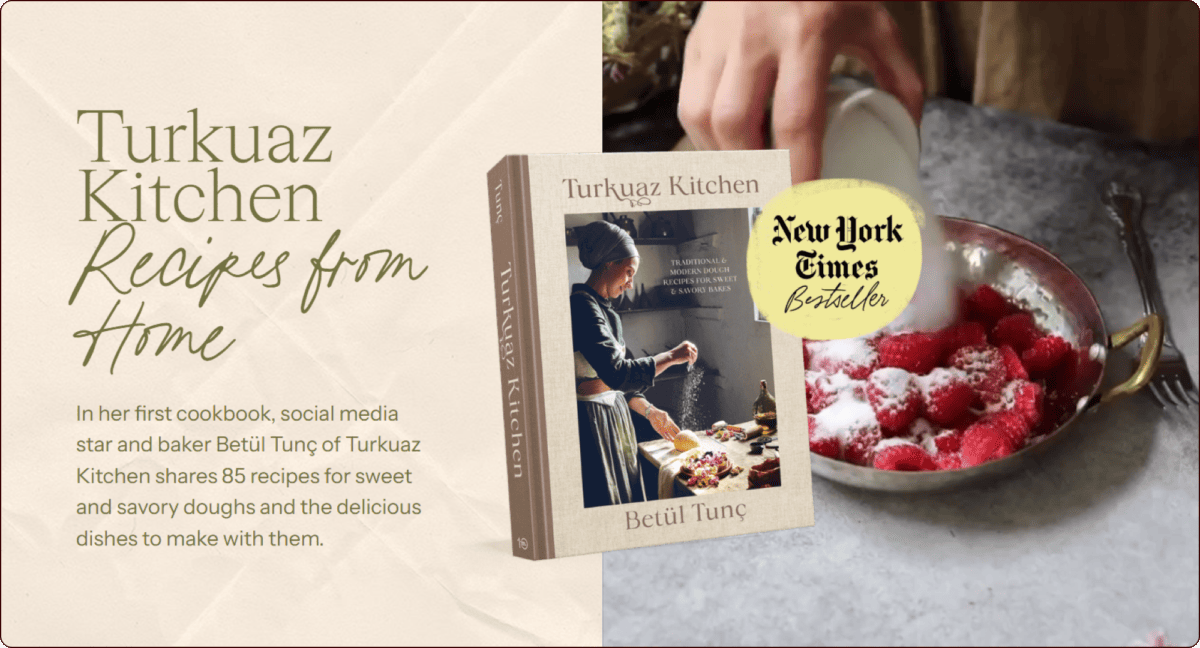
Your website can become the hub of the launch
Early on, a dedicated “My Cookbook” page on your website might just show the cover and preorder links. As the launch gets closer, it starts to grow.
You can add things like:
- Pre-order links from multiple sources
- Pre-order bonuses and giveaways
- How to purchase a signed copy
- Press or testimonials
- Book tour announcements
- Event tickets and RSVPs
- Customer support information
Your cookbook page becomes the place where readers can see everything happening around the cookbook. And because tours and events change often, the page usually evolves throughout the launch.
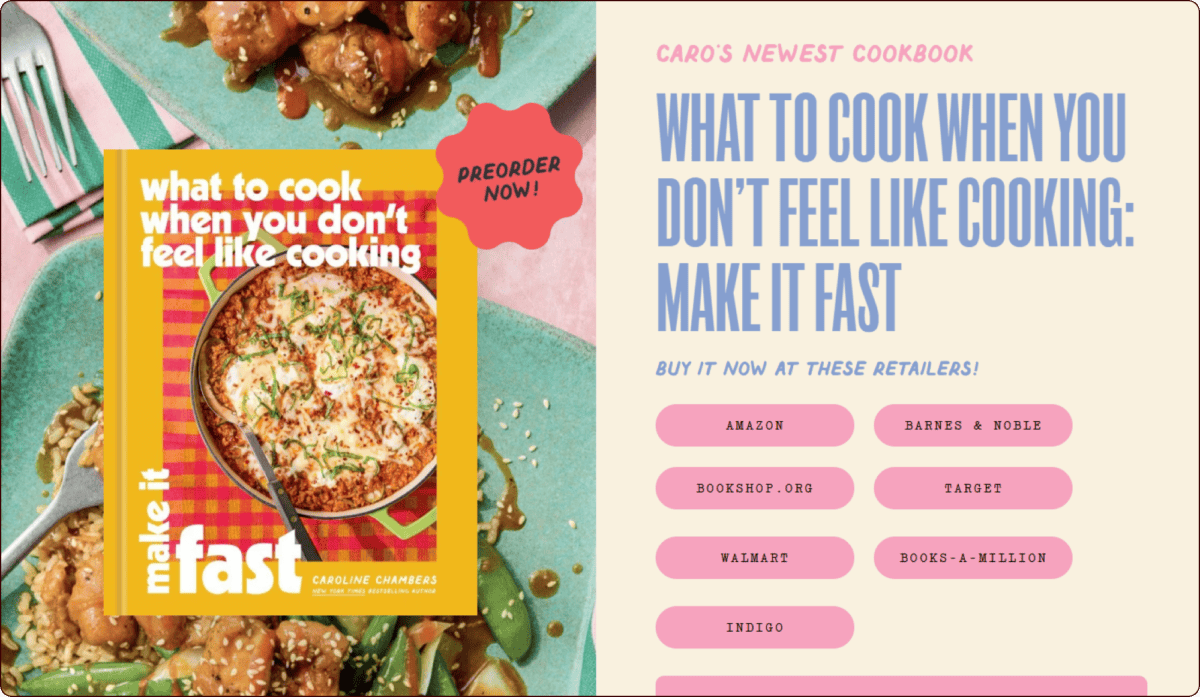
People buy books in different places—Amazon, Barnes & Noble, Bookshop, or their local independent bookstore. Instead of sending readers to a simple link hub, a special page on your website gives you a place to bring all those options together.
A good cookbook page usually includes multiple purchase buttons so readers can choose where they want to buy. Some authors also include links to purchase signed copies through independent bookstores.
The page becomes a home base for the book from pre-order to post-launch. Readers can preorder, learn about the cookbook, and explore more of the author’s world.
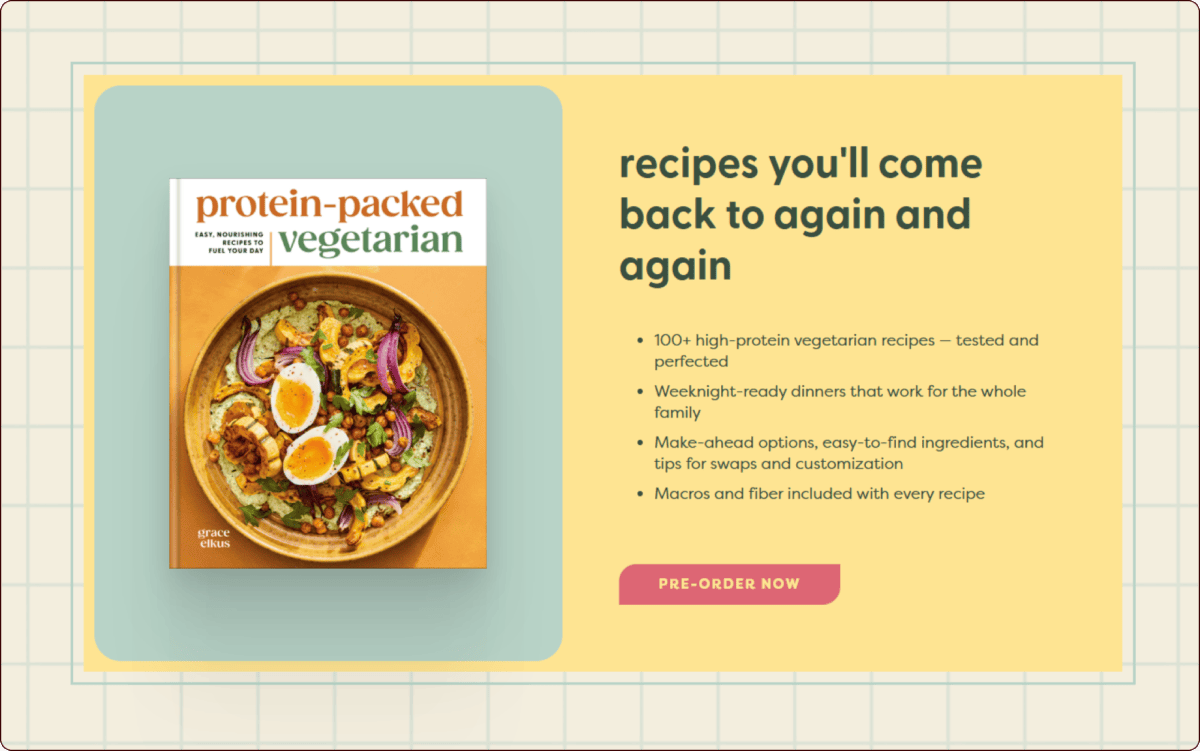
Preorders drive the launch energy
Most of the energy around a cookbook launch happens before readers even have the book in their hands.
Preorders, and the orders that happen right around launch day, often determine whether a book lands on bestseller lists. Because of that, authors spend a lot of time encouraging early orders.
But simply repeating “preorder the book” over and over on Instagram can get old quickly.
The launches that keep momentum going usually introduce new moments along the way.
Sometimes that looks like giveaways for people who upload proof of purchase. Sometimes it’s raffles or special signed copies through independent bookstores.
These moments give authors something new to talk about! Instead of one announcement, the launch becomes a series of conversations.
Planning works best when you work backward
Most cookbook launches start with one fixed point: the publication date.
From there, the timeline for everything else works backward from the publication date.
- When will preorders open?
- When will the announcement happen?
- When should the website be ready?
- Are readers already hearing from you regularly through email?
That last one is easy to overlook.
If your audience hasn’t heard from you in a while, the big announcement email may not land the way you hope. But if people are already used to hearing from you, the news feels like a continuation of an ongoing relationship.
Thinking backward helps build momentum toward the moment the book enters the world.
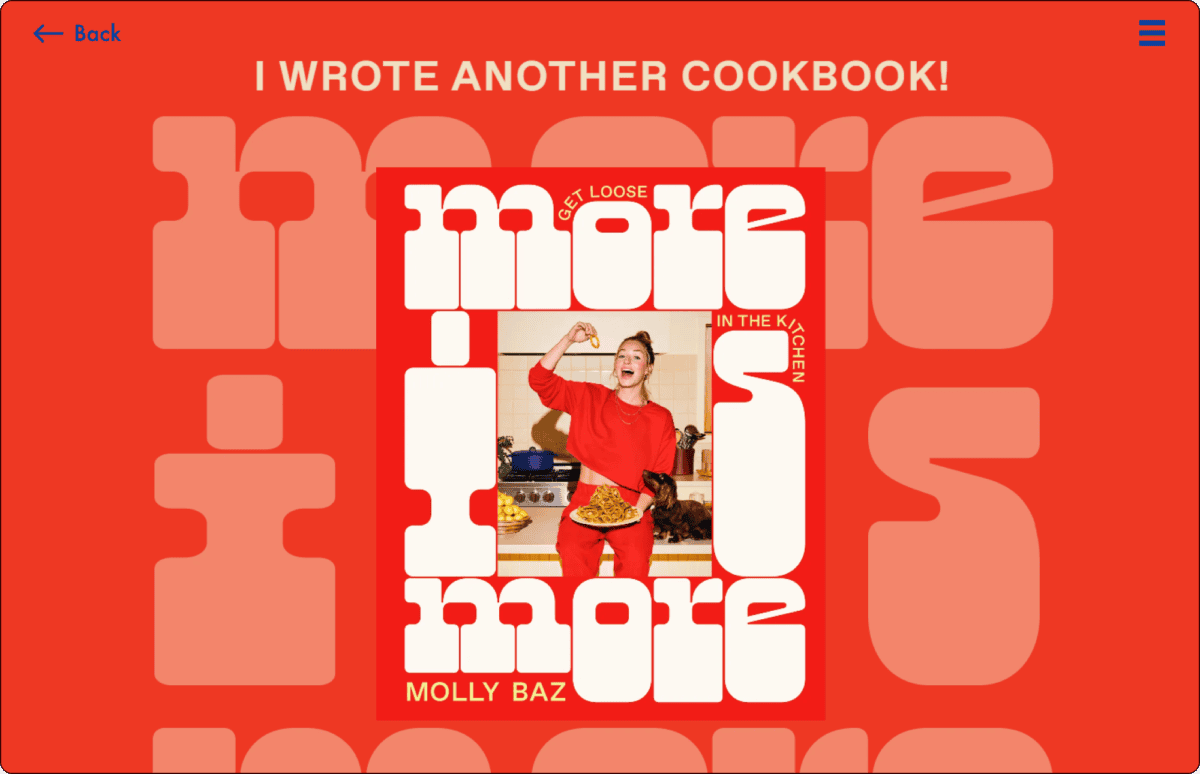
Deciding how much the cookbook shapes your brand
Some cookbook authors treat each book like a new creative era.
The website colors shift. Typography changes. Photography and illustrations take over the brand. The entire site begins to reflect the visual world of the cookbook.
Others keep their brand more stable and highlight the cookbook inside that system.
Both approaches work. It just depends on how the author sees the relationship between their brand and their cookbooks.
For some, each cookbook marks a new era. For others, it’s part of a longer story.
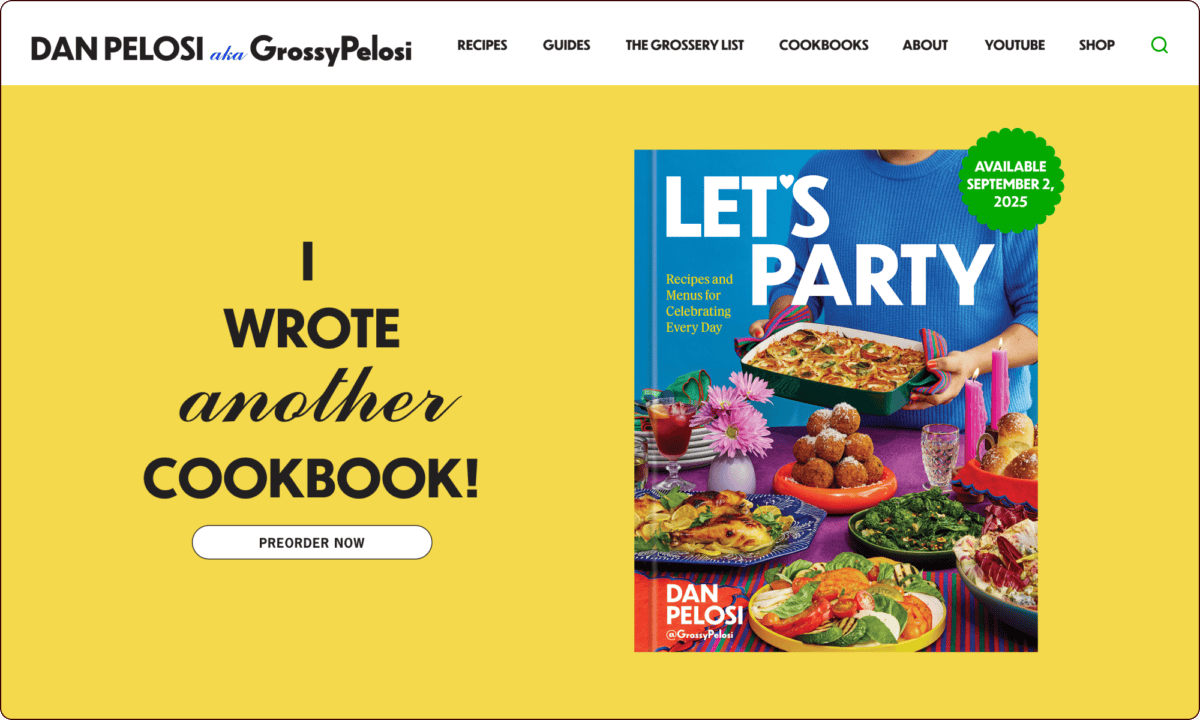
People don’t always enter your website where you expect
One thing that’s easy to forget is that website visitors don’t always arrive exactly where you expect.
- They might find your site through an old recipe.
- They might land on a page from search results.
- They might stumble across something someone shared.
That means the cookbook cannot live in just one place.
Featuring the book on the homepage, in navigation, in a pop-up, or through small prompts across the site helps ensure that wherever someone lands, they can discover your cookbook.
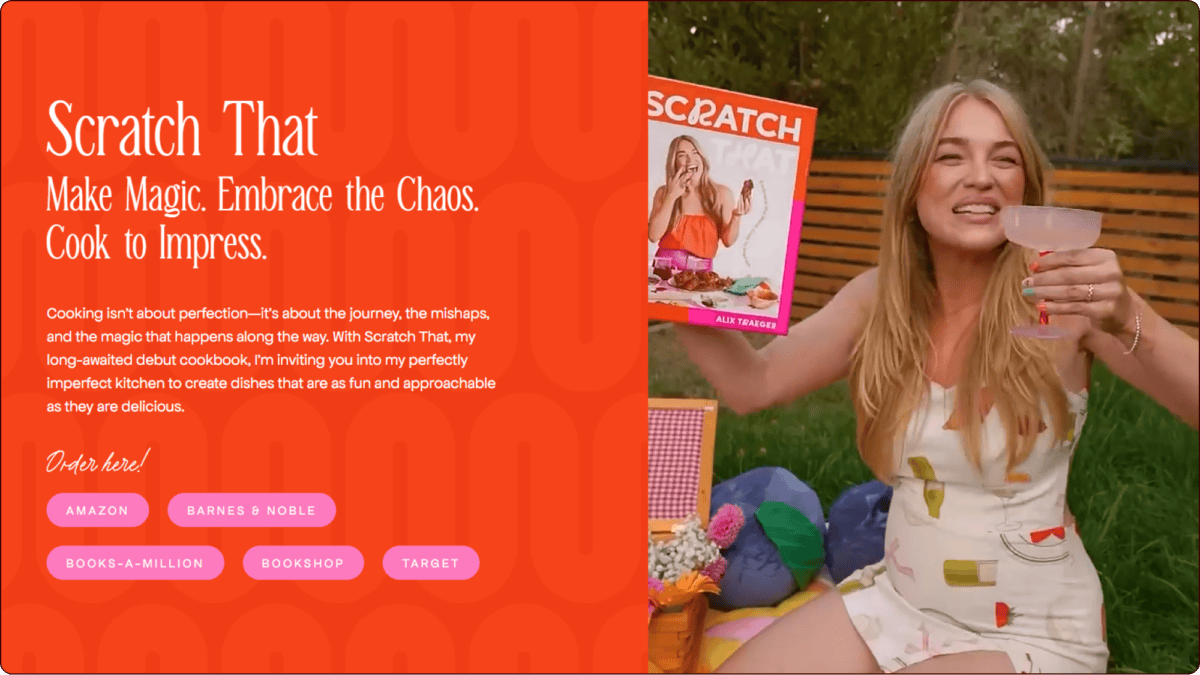
Your biggest fans are the real engine of a launch
A million social media followers can look impressive. But often the people who matter most are your VIP fans, the readers who care deeply about what you’re creating and cooking.
They cook the recipes, attend events, and tell their friends.
These readers become ambassadors for the book. Building relationships with them through email lists, membership communities, or other spaces can be incredibly powerful.
The numbers might look smaller compared to social platforms, but the engagement is usually much deeper.
When those fans start sharing recipes they cooked or photos of the book, they become the most authentic promotion you could ask for.
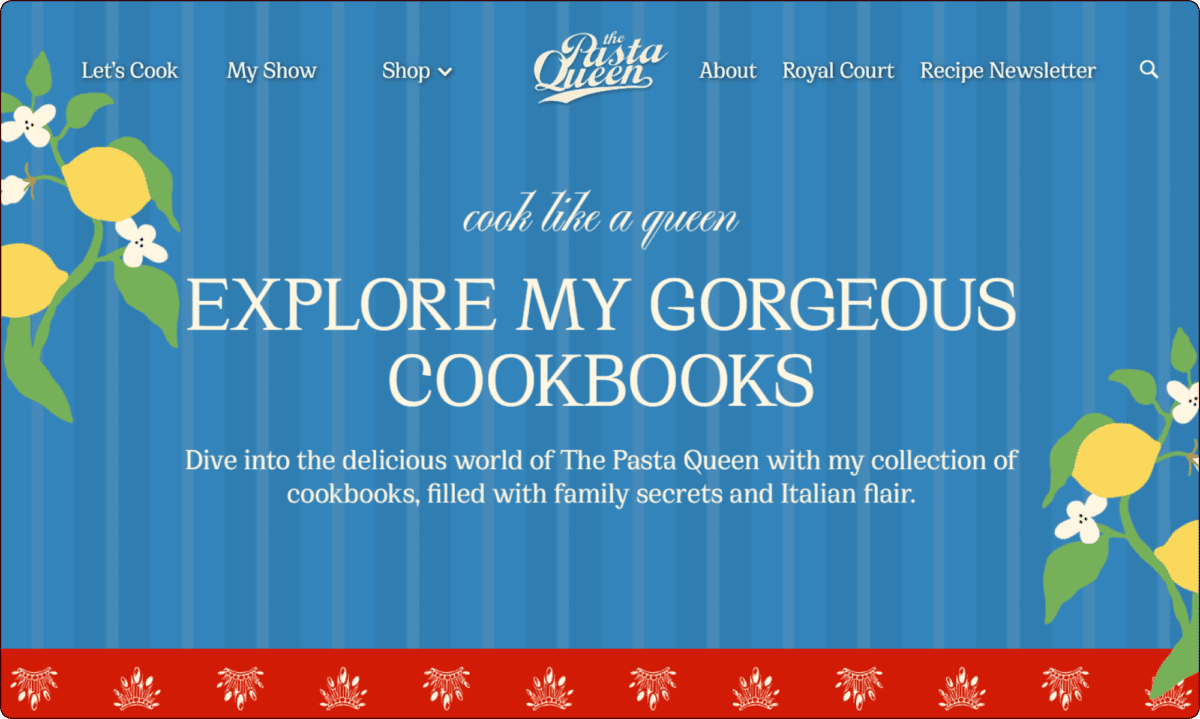
Let the moment live longer
Social media moves quickly, posts get buried, stories expire, and attention shifts.
But your website can hold onto the moment longer!
You can include tour recaps, photos from events, reader testimonials, and behind-the-scenes stories from the book creation process. These pieces extend the life of the launch and turn it into part of your long-term brand.
Sure, a cookbook is something you buy. But it’s also something people cook from, photograph, share with friends, and return to over time. And that deserves a place to live permanently.